Cleanroom & Medical Uses of 304 Stainless Steel: Industry Trends & Applications
Why Is 304 Stainless Steel Used in Medical and Cleanroom Applications?
304 stainless steel is one of the most commonly used materials in cleanrooms, hospitals, laboratories, pharmaceutical facilities, and medical manufacturing environments because it combines excellent corrosion resistance, ease of cleaning, durability, and hygienic performance. Its smooth, non-porous surface helps minimize contamination risks and withstands repeated cleaning and sterilization procedures, making it a trusted material for environments where cleanliness and regulatory compliance are critical.
As contamination control standards become increasingly stringent across healthcare, biotechnology, and pharmaceutical industries, 304 stainless steel continues to be the preferred choice for critical equipment, fixtures, surfaces, and cleanroom infrastructure.
What Makes 304 Stainless Steel Ideal for Cleanrooms and Healthcare Facilities?
Corrosion Resistance and Long-Term Performance
304 stainless steel offers excellent resistance to corrosion, oxidation, and chemical exposure in many environments. Medical facilities and cleanrooms frequently use aggressive disinfectants, sterilization agents, and cleaning chemicals that can degrade other materials over time. The chromium-rich composition of 304 stainless steel helps maintain structural integrity and appearance even under demanding operating conditions.
Hygienic and Easy-to-Clean Surfaces
One of the primary advantages of 304 stainless steel is its smooth, non-porous surface. Unlike porous materials that can trap bacteria, moisture, or contaminants, properly finished stainless steel surfaces are easier to clean and sanitize. This makes 304 stainless steel particularly valuable in cleanrooms, operating rooms, research laboratories, and pharmaceutical production facilities.
Durability in High-Traffic Environments
Hospitals, laboratories, and pharmaceutical facilities operate around the clock. From carts and workstations to wall panels and laboratory equipment, materials must withstand constant use while maintaining appearance and functionality. 304 stainless steel provides the durability required to support long service life and reduced maintenance requirements.
Common Medical and Cleanroom Applications for 304 Stainless Steel
| Application | Why 304 Stainless Steel Is Used |
|---|---|
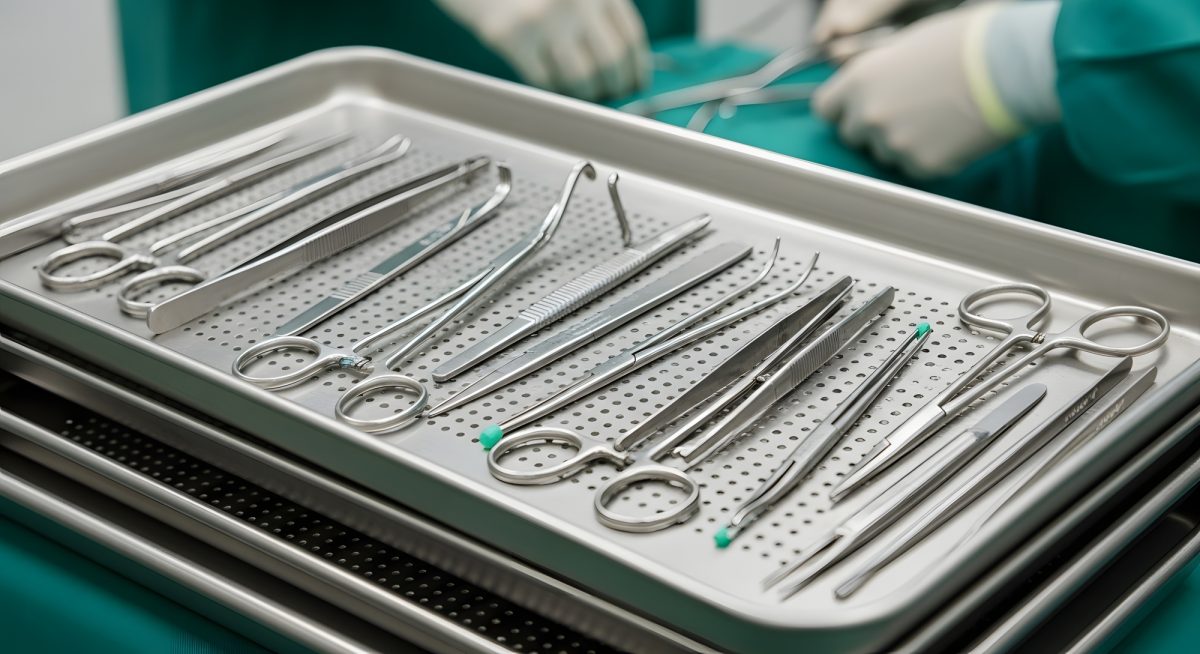
| Surgical Equipment | Resists corrosion and repeated sterilization |
| Hospital Fixtures | Supports hygiene and easy cleaning |
| Laboratory Benches & Workstations | Provides chemical resistance and durability |
| Pharmaceutical Equipment | Helps maintain contamination control standards |
| Cleanroom Panels & Wall Systems | Easy to clean and maintain |
| Medical Carts & Storage Systems | Durable and corrosion resistant |
| Shelving & Storage Racks | Long service life in controlled environments |
| Modular Cleanroom Systems | Supports cleanliness and regulatory compliance |
These applications demonstrate why 304 stainless steel remains a foundational material throughout healthcare, life sciences, and pharmaceutical industries.
What Stainless Steel Is Used in Hospitals?
304 stainless steel is widely used throughout hospitals because it can withstand frequent cleaning, sanitation procedures, and daily wear while maintaining a professional appearance. Common hospital applications include work surfaces, instrument storage, handrails, carts, counters, wall protection systems, and medical equipment enclosures. Its corrosion resistance and hygienic properties help support infection prevention and facility maintenance programs.
What Stainless Steel Is Used in Pharmaceutical Manufacturing?
Pharmaceutical manufacturers depend on materials that support contamination control and regulatory compliance. 304 stainless steel is commonly used for process equipment, cleanroom infrastructure, storage systems, workstations, and support equipment due to its durability, cleanability, and resistance to many cleaning agents used in pharmaceutical environments.
304 vs. 316 Stainless Steel for Medical Applications
Both 304 and 316 stainless steel are used in healthcare and cleanroom environments, but selecting the right grade depends on the operating conditions.
Choose 304 Stainless Steel When:
- General corrosion resistance is sufficient
- Standard healthcare and laboratory environments are involved
- Cost-efficiency is important
- Frequent cleaning and sanitation are required
Choose 316 Stainless Steel When:
- Exposure to chlorides is expected
- Aggressive chemical environments are present
- Additional corrosion protection is required
- Pharmaceutical or marine-adjacent applications are involved
For many hospital, laboratory, and cleanroom applications, 304 stainless steel provides the ideal balance of performance, durability, and cost. However, facilities exposed to harsh chemicals or elevated chloride concentrations may benefit from upgrading to 316 stainless steel.
Related Resource: 316 Stainless Steel vs. 304 Stainless Steel: Choosing the Right Material
Emerging Trends in Medical and Cleanroom Stainless Steel Applications
Micro-Environment Optimization
Pharmaceutical and biotechnology organizations are increasingly implementing micro-environment monitoring strategies to maintain precise temperature, humidity, and contamination control within critical zones. Stainless steel continues to play an important role in these environments because of its corrosion resistance and ease of cleaning.
Modular Cleanroom Systems
Modular cleanrooms continue to gain popularity because they provide flexibility, scalability, and faster deployment compared to traditional construction methods. Many of these systems use 304 stainless steel wall panels, framing components, and equipment supports to meet cleanliness and maintenance requirements.
Antimicrobial Surface Technologies
Manufacturers are increasingly exploring antimicrobial coatings and hybrid material technologies designed to enhance the already strong hygienic performance of stainless steel surfaces. These innovations are being evaluated for use in medical facilities, pharmaceutical manufacturing, and contamination-sensitive environments.
Why Stainless Steel Supports Cleanroom Compliance
Cleanroom environments require materials that contribute to contamination control and can withstand rigorous cleaning protocols without degradation. 304 stainless steel supports these objectives through its smooth surface, durability, corrosion resistance, and ability to tolerate repeated exposure to cleaning agents and sterilization procedures. These qualities make it a preferred material in pharmaceutical manufacturing, biotechnology laboratories, healthcare environments, and cleanroom facilities.
Frequently Asked Questions About 304 Stainless Steel in Medical Applications
Is 304 stainless steel medical grade?
304 stainless steel is widely used in medical, healthcare, laboratory, and pharmaceutical environments because of its corrosion resistance, durability, and ease of cleaning.
Why is 304 stainless steel used in hospitals?
Hospitals use 304 stainless steel because it resists corrosion, withstands repeated cleaning, and helps maintain hygienic environments.
Is stainless steel hygienic?
Yes. Stainless steel's smooth, non-porous surface helps prevent bacterial buildup and supports effective sanitation practices when properly maintained.
Can 304 stainless steel be sterilized?
Yes. 304 stainless steel can withstand repeated sterilization and cleaning procedures commonly used in healthcare and laboratory environments.
What industries use 304 stainless steel cleanrooms?
Industries include pharmaceuticals, biotechnology, medical device manufacturing, healthcare, laboratory research, and advanced manufacturing operations.
Key Takeaways
- 304 stainless steel is one of the most widely used materials in cleanroom and medical environments.
- Its smooth, non-porous surface supports sanitation and contamination control.
- The material withstands frequent cleaning and sterilization procedures.
- Common applications include hospitals, laboratories, pharmaceutical facilities, surgical equipment, and modular cleanrooms.
- Emerging trends such as modular cleanrooms and micro-environment optimization continue to increase demand for stainless steel in healthcare and life sciences industries.
Learn More About Stainless Steel Applications
Interested in learning more about how stainless steel performs across industries? Explore our related resources:
- Why 304 Stainless Steel is the Top Choice for Food Processing Equipment
- Automotive Manufacturing and Stainless Steel: Why 304 Is a Go-To
- Stainless Steel for Architectural Applications: 304 vs. 316
- Can 304 Stainless Steel Rust?
- Is 304 Stainless Steel Magnetic?
- Understanding Stainless Steel Grading Systems