Choosing Coil Coatings Based on Environment: Coastal, Agricultural, & Industrial
When you’re sourcing painted or coated steel, the coating you choose isn’t just about color or cost—it’s about performance over time. Environmental exposure plays a major role in how a coating system holds up, and choosing the wrong one can lead to premature failure, higher lifecycle costs, and frustrated stakeholders.
For metal buyers, project managers, and fabricators working in today’s volatile market, getting this decision right the first time matters. At Mill Steel, we understand the pressure to balance durability, cost efficiency, and availability. This guide breaks down how to select the right coil coating based on three of the most demanding environments: coastal, agricultural, and industrial.
Why Environment Matters in Coil Coating Selection
Coil coatings are engineered systems designed to protect steel from corrosion, UV degradation, and chemical exposure. But not all coatings perform equally in every setting.
Factors that impact coating performance include:
- Salt exposure (chlorides)
- Moisture and humidity levels
- Chemical exposure (fertilizers, pollutants, acids)
- UV radiation and temperature swings
Choosing the right system—whether that’s PVDF (Kynar), SMP, or polyester—ensures your material performs as expected throughout its service life.
If you’re looking for a foundational overview of coil coatings, you may want to check this out before diving in here: The Complete Guide to Painted & Coated Steel Coil
For industry-backed standards on coatings and testing, the National Coil Coating Association is a great resource for technical resources and best practices.
Coastal Environments: Maximum Corrosion Resistance Required
The Challenge
Coastal regions—especially along the Mid-Atlantic—present one of the most aggressive environments for coated steel. Salt-laden air accelerates corrosion, even miles inland. In fact, according to a study by the Galvanizer’s Association, salt air can affect metal corrosion up to 50 miles inland. Obviously, the rate in which it is affected depends on various factors such as wind, coastal topography, etc. High humidity and UV exposure compound the issue.
Recommended Coating: PVDF (Kynar)
For coastal applications, PVDF coatings, often referred to by the brand name Kynar, are widely considered the gold standard.
Why PVDF/Kynar?
- Exceptional resistance to salt corrosion
- Superior UV stability (minimal fading/chalking)
- Long-term color retention
- Proven performance in architectural applications
These coatings are typically used in high-end building facades, roofing systems, and components where longevity is critical.
When to Specify PVDF
- Projects within 1–5 miles of the coastline
- High-visibility architectural buildings
- Long lifecycle expectations (20+ years)
Considerations
While PVDF coatings come at a higher upfront cost, they often reduce total cost of ownership by minimizing maintenance and replacement.
Agricultural Environments: Chemical Resistance is Key
The Challenge
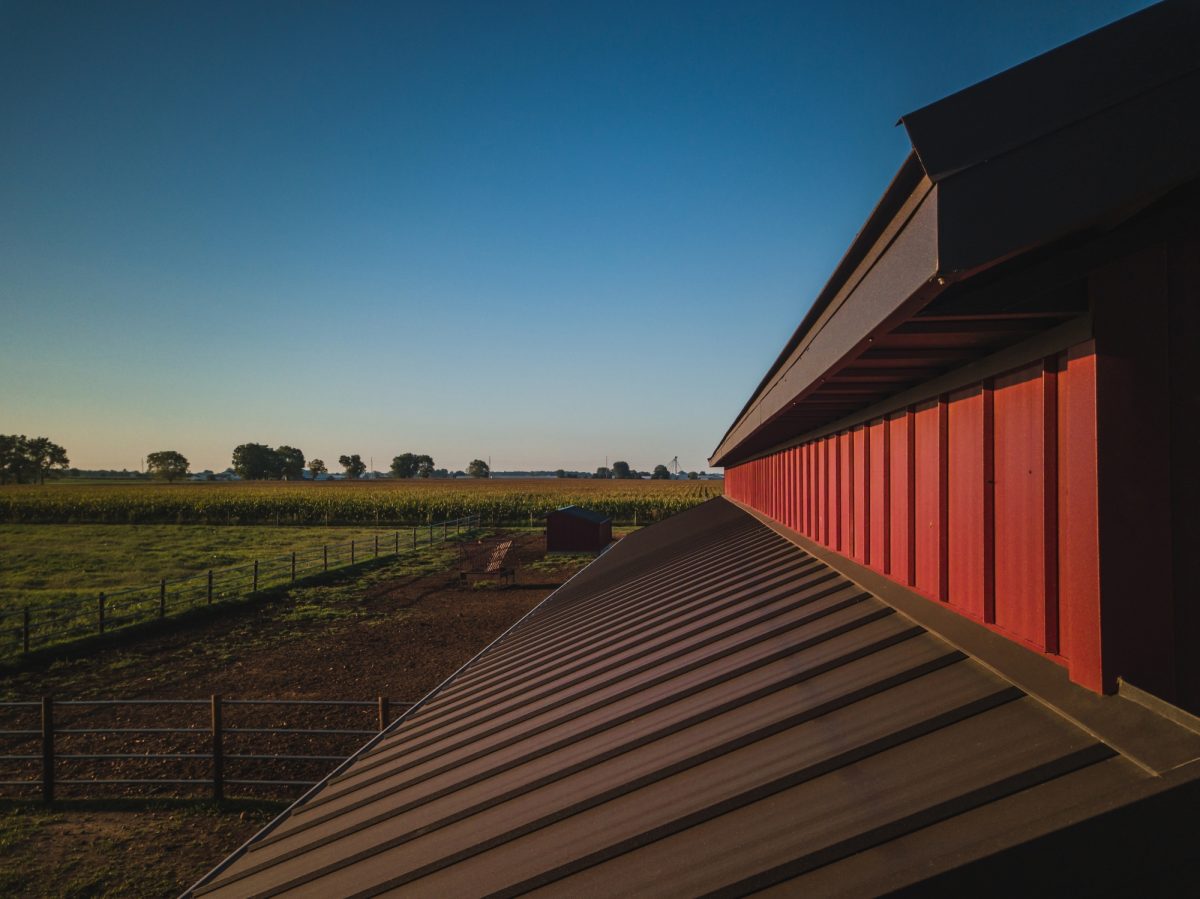
Agricultural settings introduce a different kind of threat: chemical exposure. Fertilizers, pesticides, and animal waste produce corrosive byproducts like ammonia and acids that can degrade standard coatings.
Recommended Coatings: SMP or Specialized Systems
In agricultural environments, Silicone-Modified Polyester (SMP) coatings are often used due to their balance of durability and cost. However, in more aggressive conditions, upgraded systems may be required.
Why SMP?
- Good resistance to chalking and fading
- Better durability than standard polyester
- Cost-effective for large structures
When to Upgrade Beyond SMP
- Poultry or livestock confinement buildings
- Facilities with high ammonia exposure
- Fertilizer storage or processing areas
In these cases, selecting a more advanced coating system or consulting with a coated steel supplier is a good idea.
Best Practices
- Ensure proper ventilation design to reduce chemical buildup
- Consider thicker coating systems or specialized primers
- Work with a metal coil supplier who understands agricultural applications
Industrial Environments: Balancing Performance and Cost
The Challenge
Industrial environments vary widely, but many include exposure to pollutants, chemicals, and airborne particulates. Manufacturing plants, refineries, and urban settings often introduce acidic compounds that can attack coatings.
Recommended Coatings: SMP or PVDF (Depending on Severity)
For general industrial applications, SMP coatings are often sufficient. However, in more aggressive environments, stepping up to PVDF may be necessary.
Key Factors to Evaluate
- Type of pollutants (acidic vs. neutral)
- Proximity to heavy manufacturing
- Frequency of exposure
SMP vs. PVDF in Industrial Settings
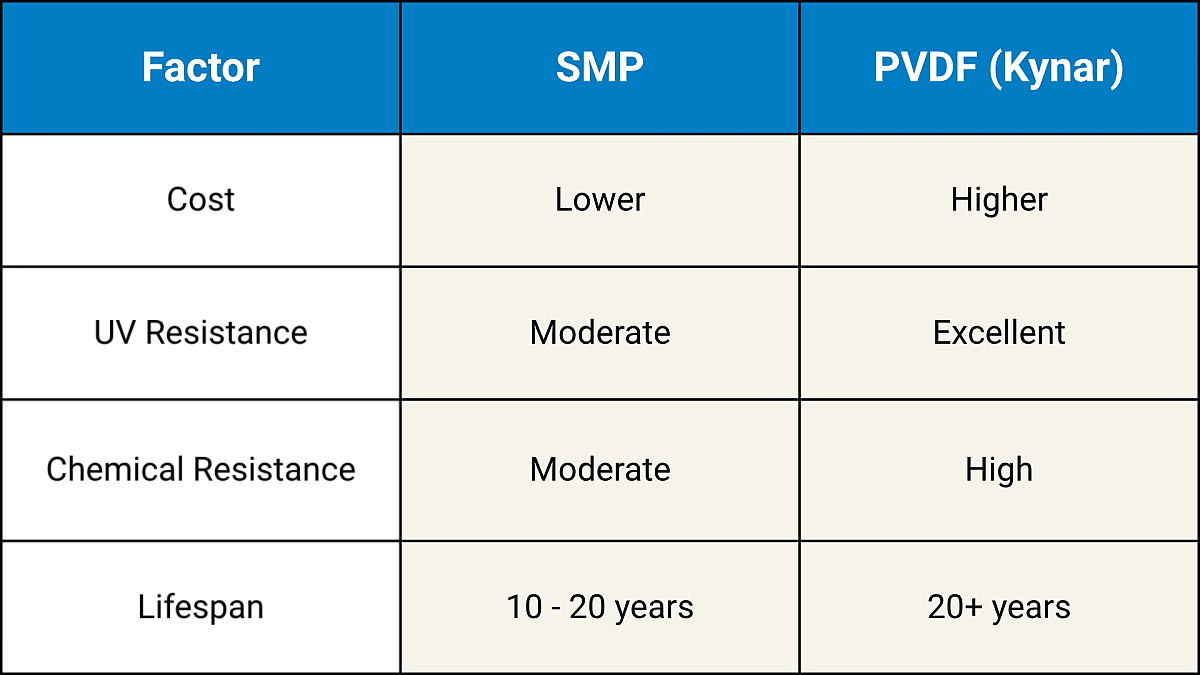
Recommendation
If your project is in a heavily industrialized area—or if downtime and maintenance are costly—investing in PVDF can provide long-term value.
Regional Considerations: Why This Matters in the Mid-Atlantic
The Mid-Atlantic region presents a unique combination of environmental challenges:
- Coastal salt exposure along the Eastern Seaboard
- Agricultural operations inland
- Dense industrial corridors in key metros
This overlap means many projects require a more nuanced coating strategy. It’s not uncommon for buyers to underestimate exposure conditions—leading to coating failure earlier than expected.
Working with an experienced steel coil supplier or metal distributor ensures you’re selecting the right coating system for your specific application—not just the lowest upfront cost option.
How to Choose the Right Coating: A Practical Framework
When evaluating coating systems, ask the following:
1. What is the primary environmental exposure?
- Salt → Coastal → PVDF
- Chemicals → Agricultural → SMP or specialized
- Pollutants → Industrial → SMP or PVDF
2. What is the expected lifespan?
- Short-term (10–15 years): Polyester or SMP
- Long-term (20+ years): PVDF (Kynar)
3. What are the maintenance expectations?
- Low maintenance required → PVDF
- Routine maintenance acceptable → SMP
4. What is the total cost of ownership?
Don’t just evaluate material cost—consider:
- Replacement frequency
- Labor costs
- Downtime
Partnering with the Right Supplier
Choosing the right coating is only part of the equation. Supply chain reliability, inventory depth, and technical expertise matter just as much.
At Mill Steel, we don’t just supply material—we help our customers navigate complex decisions with confidence. As a trusted metal distributor and coated steel supplier, we maintain deep inventory across coated products and work closely with customers to match material to application.
Whether you’re building in a coastal zone, sourcing for agricultural projects, or managing industrial demand, our team is committed to helping you get it right the first time.
Continue Learning
For a deeper dive into coating systems, paint types, and performance considerations, check out: The Complete Guide to Painted & Coated Steel Coil
You can also explore additional resources on building with steel, coating performance, and best practices directly through Mill Steel’s blog and technical library.